
Ocean Love: Understanding Tides for Safer Coastal Adventures (+ The Best Gear for the Tide)
The Tide Cycle
Most of us know that the sea rises and falls in cycles, and it has something to do with the gravitational pull from the Moon, Sun and rotation of Earth.
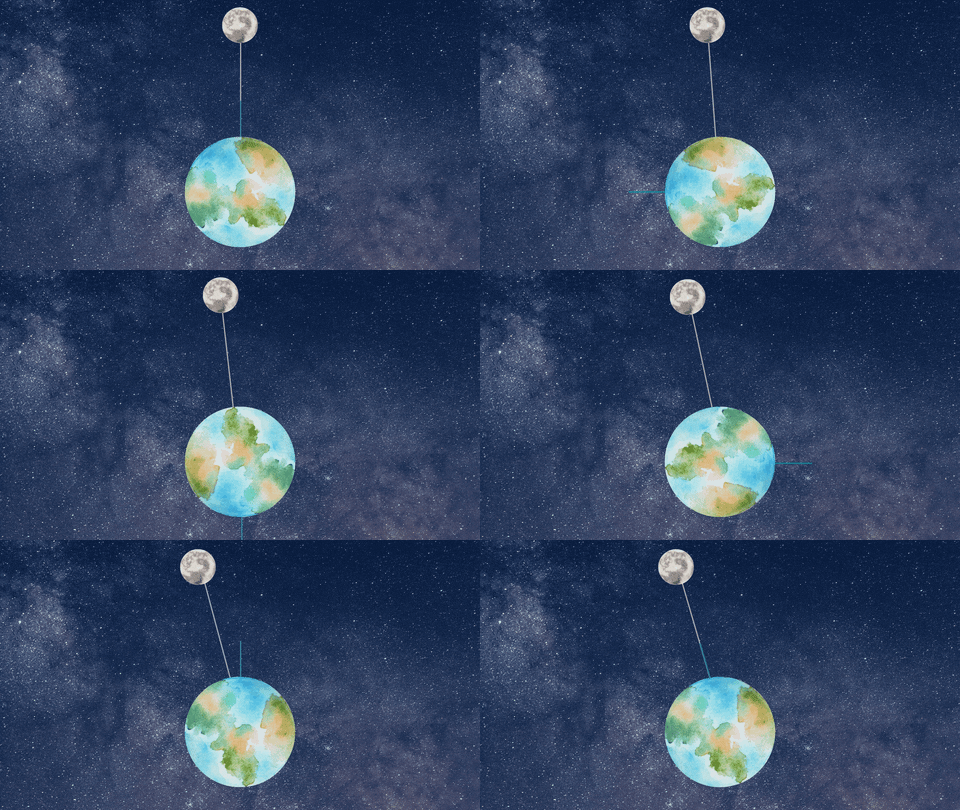
A lunar day is 24 hours and 50 minutes, made up of the 24 hours it takes for Earth to rotate, plus the small amount the Moon has orbited.
During a lunar day there are typically two high and two low tides at intervals of just over six hours. This pattern is called a semidiurnal tide cycle. As the Earth spins on its axis, one side is closer to the Moon and its gravitational pull causes the first high tide. The centrifugal force of the earth spinning causes the second high tide on the farthest side from the Moon.
Tide cycles vary to location. The Mediterranean sees less tidal amplitude due to the narrow channel connecting the sea to the Atlantic Ocean. In the Gulf of Mexico there are diurnal tides with only one high and one low tide in a lunar day. Tidal patterns vary around the world, even in the UK, where coastlines and sea depth varies.

The movement of the tide from low to high is the flood, and the high tide draining away is called the ebb. The middle two hours of flooding and ebbing tides can see the most movement of water, and stronger currents. It can be particularily difficult to swim back to shore during an ebbing tide, and there is an increased risk of rip currents as the build-up of water from the shoreline heads back out to sea.
An hour either side high and low tide is reached there is usually a period of slack water where there is less movement, and the water is 'unstressed'.
Slack water can be enjoyed by swimmers as there is little tidal current. Snorkelers and scuba divers may find improved visibility due to less silt being churned up. The timing of slack water depends on location and local conditions so it's really important to do your research beforehand.
Whilst tidal cycles describe patterns, it is important to remember that open water can be unpredictable and factors including waves, currents, obstructions, and entry/exit into the water must be considered.
🌊 Tide-Ready Gear When the flood tide starts coming in fast, the last thing you want to worry about is your phone or dry clothes getting damp. Our recycled neoprene pouches are naturally water-resistant and cushioned, making them the perfect companion for a day at the rock pools. > [Shop UK Made Recycled Pouches]
Neap & Spring Tides
During the new and full Moon the Sun adds to the gravitational pull of the Moon which makes low tide even lower, and high tide greater. This is called a spring tide. Seven days later follows a neap tide when the Sun and Moon are at right angles, partially cancelling the gravitational pull resulting in a smaller tidal range.
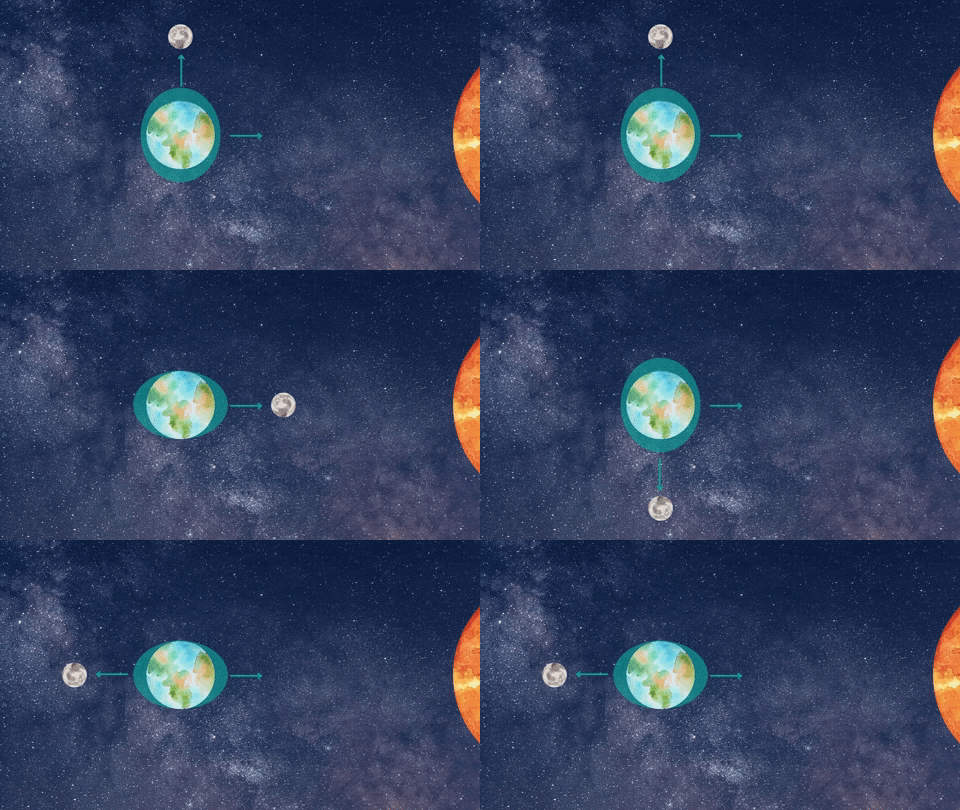
Extreme Tidal Ranges
During equinoxes in March and September, spring tides are even larger due to the Moon being closest to Earth in its elliptical orbit, called the perigean spring tide, or king tide. At low tide coast goers can view exciting rockpools and their inhabitants which would ordinarily be hidden.
However you adventure by the waterside, checking the Met Office or RNLI for local tide times is essential. And if you're looking for a way to carry your coastal essentials that actually gives back to the sea, explore our collection of recycled bags, handmade in the UK from retired wetsuits. By turning waste into wonder, we’re helping keep our shorelines clean for many more low-tide explorations to come.

The Tide-Chaser’s Essentials:
-
The Everyday Crossbody Bag: Perfect for keeping your phone and car keys safe from salt spray while you’re out on the rocks. [Shop Now]
-
The Trinity Pyramid Pouch: Compact and rugged—ideal for sea glass collectors and shell seekers. [Shop Now]